
When you can only see the next pole
What a mountain taught me about navigating change.
We set off in the motorhome for Easter weekend at Mount Taranaki with simple intentions: few nights close to nature, maybe small walks, nothing too ambitious. There was one hut I’d looked at before, Syme Hut at nearly 2000m above the sea level, the kind of place that sits in the “one day I will” category. Remote. Rugged. Aspirational.
To our surprise, at the Dawson Falls Visitor Centre, the map described it as a possible day walk, weather and skills permitting. The next morning the conditions were good, so we decided to try. We bought a backpack (because of course we forgot one), packed sandwiches and Easter treats, and set off on the nearly 9 km journey.
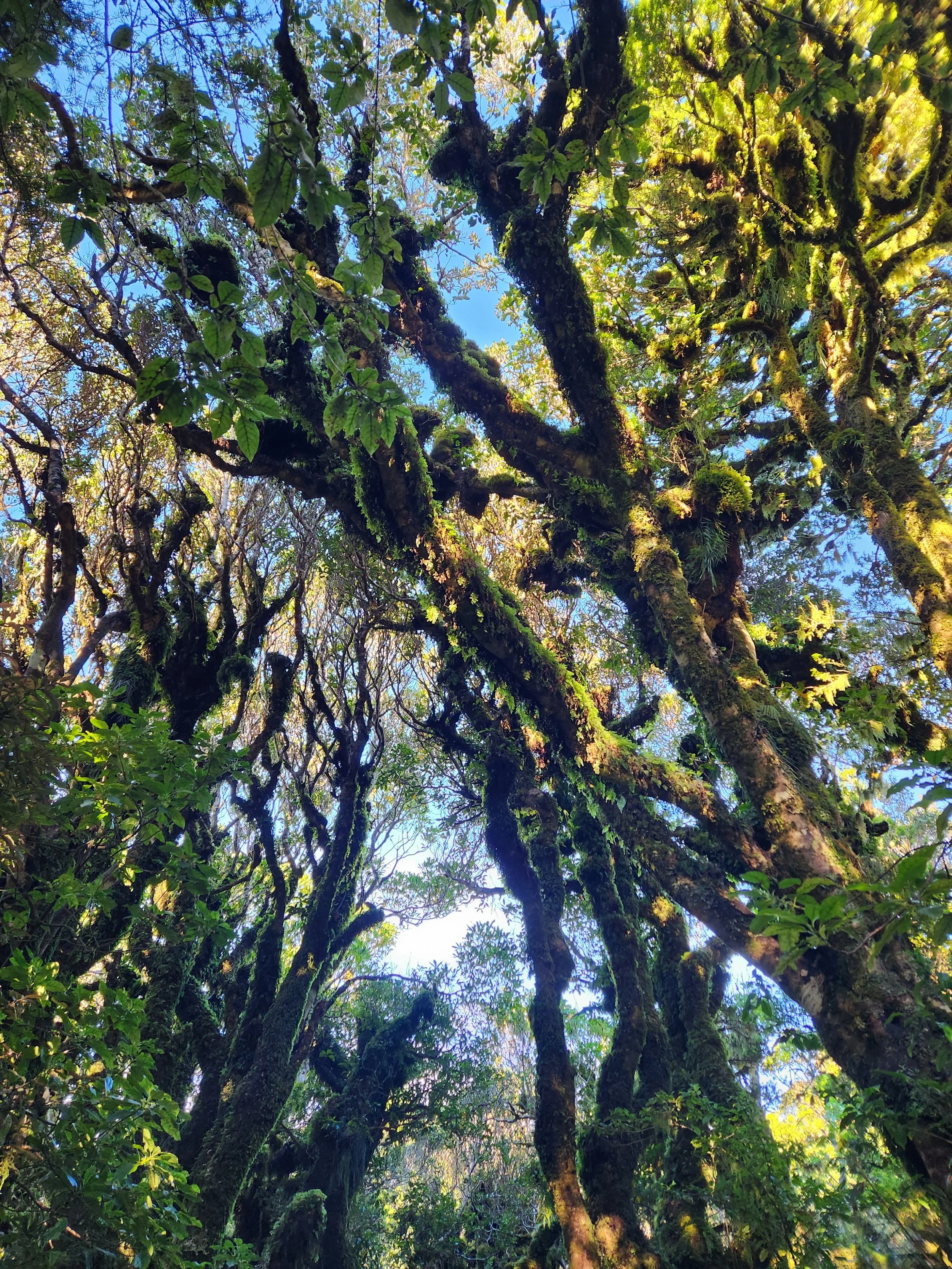
The track carried us through the lush, humid goblin forest - moss hanging like old stories, roots twisting under our feet, the air pure and clean. Then the forest opened into a clear path through low alpine shrubs, the kind that bend with the wind and cling to the mountain with quiet determination. Wooden stairs lifted us higher, step by step, into thinner air.
Clouds thickened… or maybe we were simply climbing into them?
Then came the part my son called “the fun bit”: the volcanic zone. The landscape shifted suddenly and completely. Soft earth became sharp, broken rock. The ground felt unstable, sliding under our boots. The stones were jagged, dark, and ancient - the kind of terrain that doesn’t invite you to linger. It pushes you forward because standing still feels harder than moving. Every step required attention. Every choice mattered.
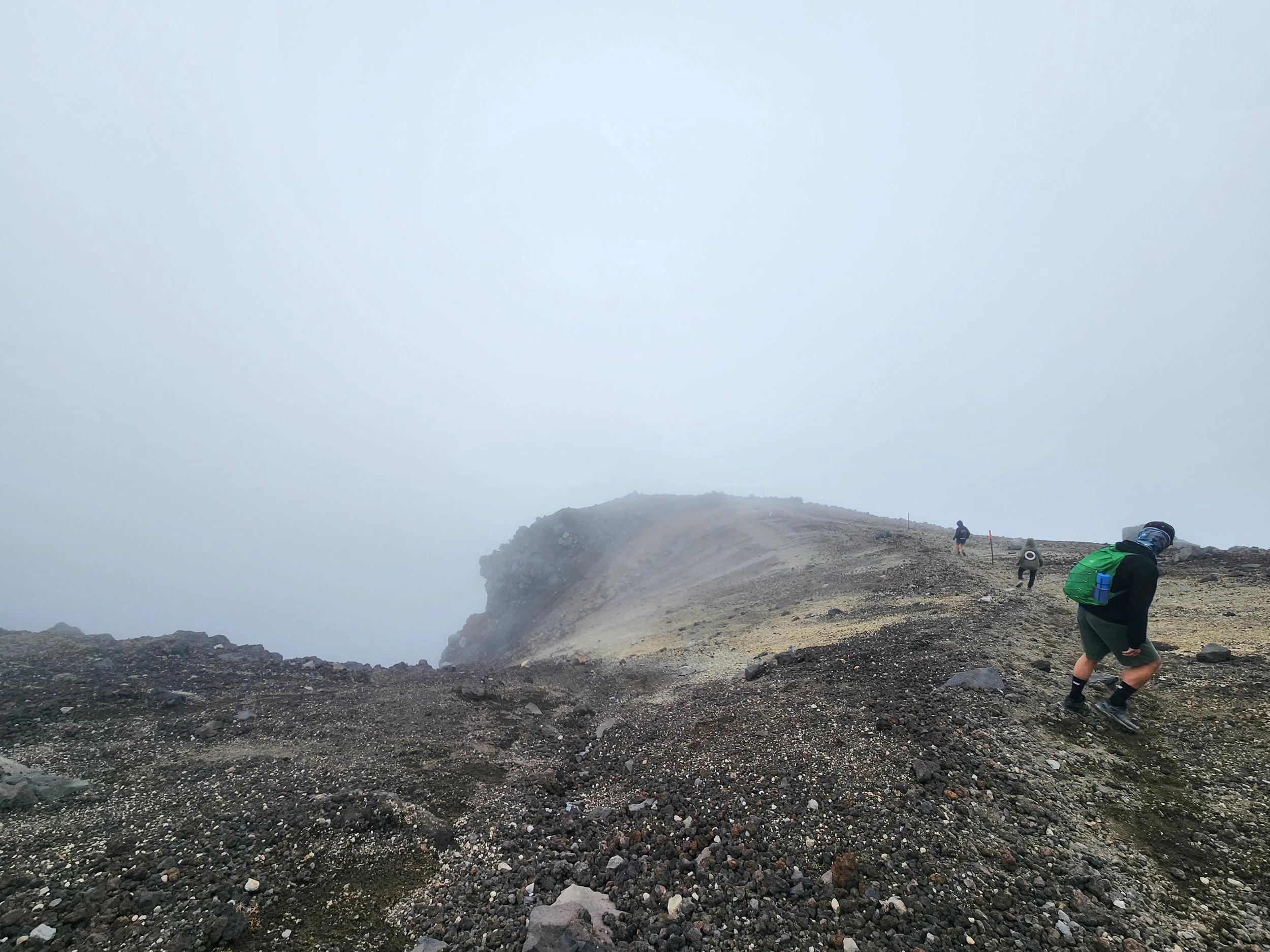
The trail was marked only by poles disappearing into the fog.
At one point the mist was so dense we could only see to the next pole. The air was so wet you could taste it.
I remember telling my kids, “Find your own way to the next pole - only you know your body: how long your steps can be, how much support you need from the rocks, whether using all four limbs helps.”
It was fun and challenging, and the question hung in the air: Do we keep going, or do we turn back?
We stopped for a moment, each of us finding a rock to sit on, eating hot cross buns gifted by a couple we met just before we set off. We were passed the halfway (probably). We decided to keep moving, doubts followed.
A few minutes later, a couple came down, cheering us on as we were only twenty minutes away. That encouragement mattered more than they probably realized.
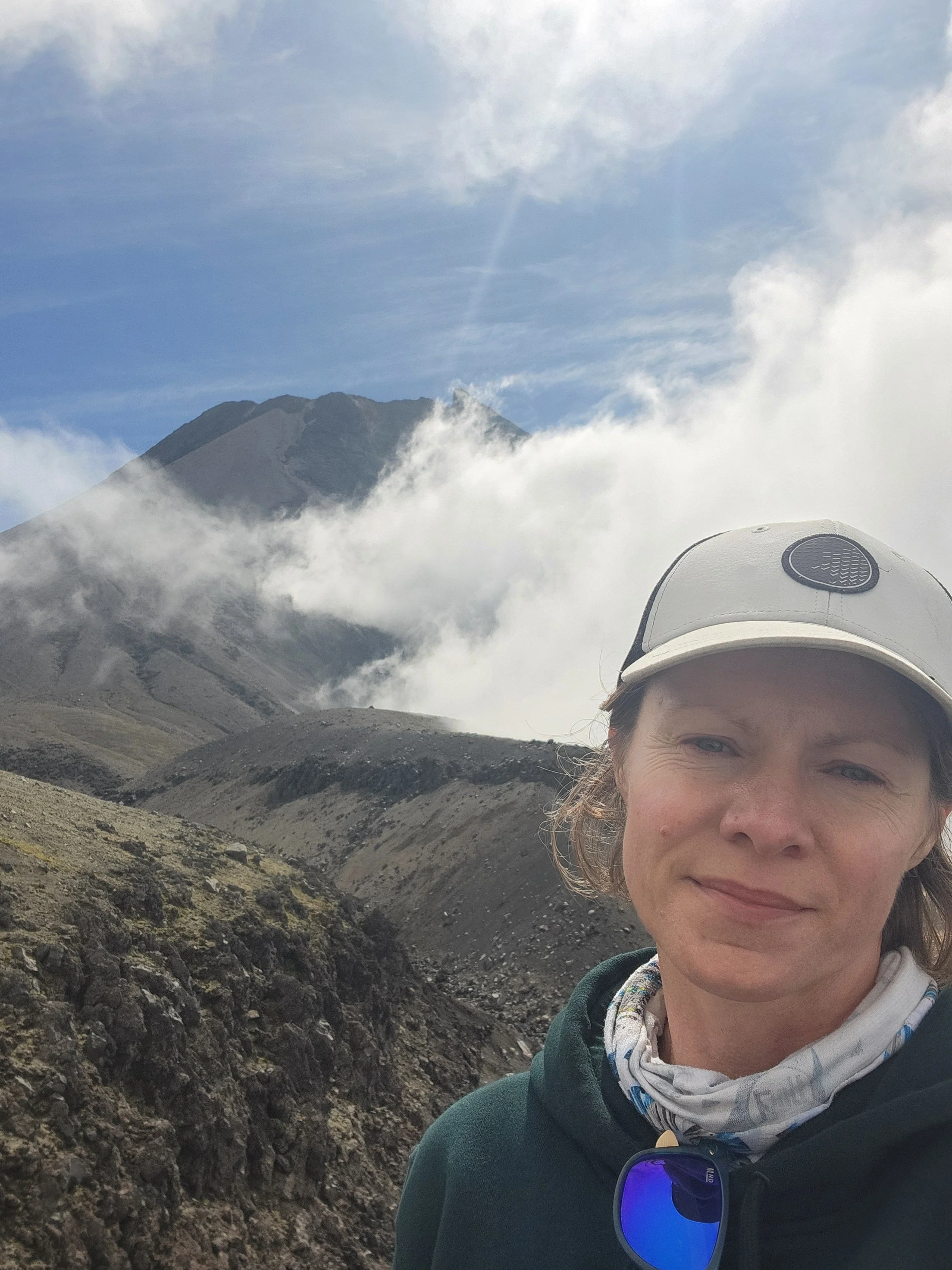
When we finally scrambled up the last rocky section, the sun broke through.
Suddenly, there she was, the majestic Taranaki Maunga, emerging from the clouds beside us. That moment of light felt like a blessing.
A reminder of where we were, of what we’d done to get there.
Five minutes later we were in the hut, eating sandwiches that tasted like the best food on earth. Do you know that feeling?
The descent was its own adventure: shaky legs, careful steps, cheering on other climbers the way we’d been cheered on. Only when we reached the bottom did we realize how far we’d climbed.
I ended the day thirsty and tired, but immensely grateful for the challenge.
As I was resting, it struck me how much life resembles this mountain.
Some parts of the path are easy and beautiful. You can see several steps ahead. Other times, you only see the next pole and your job is simply to design the small steps that get you there.
And sometimes, all you can do is respond to the conditions around you. There are things in life far beyond our control, and the only choice we truly have is how we react to them. The flexibility to adjust your pace, the length of your steps, or the support you use - that’s a set of skills we learn over a lifetime.
Every time you take on a challenge, you learn something new about yourself. Some challenges help you find courage. Others humble you, reminding you that maybe you’re not ready yet. It doesn’t mean you won’t get there. It simply means something needs adjusting - timing, preparation, support, mindset.
It’s funny how our values quietly shape the path beneath our feet.
Courage shows up when the ground gets sharp and uncertain. Perseverance becomes the steady rhythm that keeps you moving forward. Respect reminds you to pause, breathe, and honor your limits.
Your values help you recognize which “rocks” in life truly support you and which are just decoration. They help you appreciate the encouragement you receive and guide you to offer the same to others.
They anchor you when the fog rolls in. They steady your steps when the terrain shifts. They help you stay connected to who you are becoming.
You breathe.
You move.
You return to what matters.
You stay yourself.
And that is exactly how behavior change works - one step, one breath, one choice at a time.
You don’t need to see the whole summit. You just need to find your next pole.
Few coaching questions for You
As you think about your own “mountain,” you might consider:
Where in your life is the path clear and inviting right now?
Where are you moving through fog - only able to see the next small step?
What conditions around you are outside your control, and how are you choosing to respond to them?
Where might you need to adjust your pace, your expectations, or the support you lean on?
Which challenges are calling you to be brave and which ones are simply asking you to wait until you’re ready?
What’s one ‘next pole’ you can move toward this week?
Your journey doesn’t need to be perfect. It just needs to be yours.
If you’re standing somewhere on your own mountain right now - unsure of the next pole or simply wanting a clearer view of what matters - you’re welcome to book a Free Clarity Call. Sometimes all it takes is a conversation to see your next step more clearly.